
Quick answer
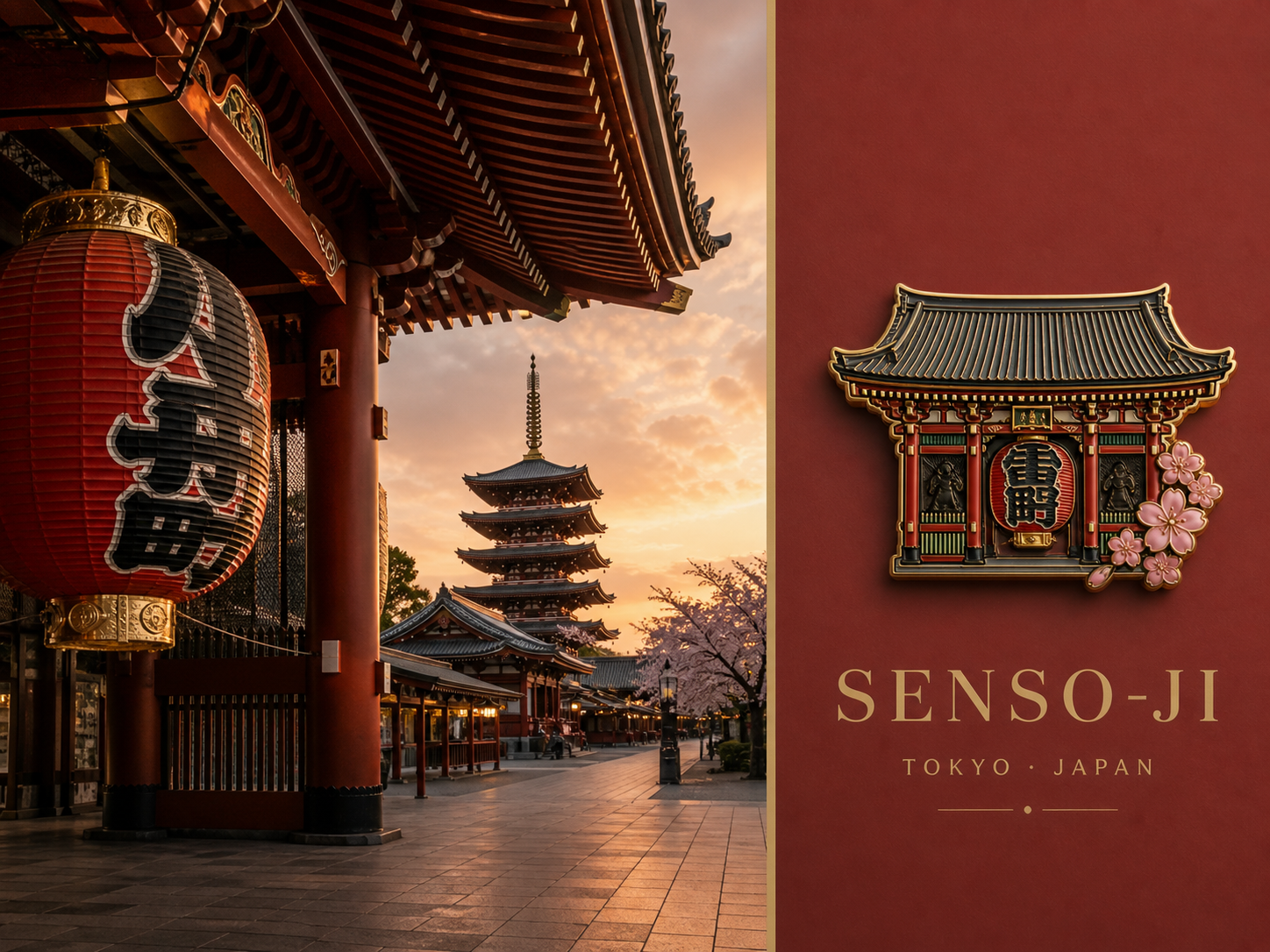
This sensoji tokyo guide covers an ancient Buddhist temple in Asakusa, dedicated to Kannon. Walk through Kaminarimon, pass under the giant red lantern, browse Nakamise, purify at the water basin, then bow quietly at the main hall. Look for the five-story pagoda and the nearby Asakusa Shrine before leaving the grounds.
Full transcript
Kaminarimon and the Red Lantern
Begin at Kaminarimon, the Thunder Gate, where the giant red chochin lantern hangs above the street. The front of the lantern carries the gate's popular name, while the back shows its official name, Fūraijinmon. The lantern weighs around seven hundred kilograms. This is the threshold into sensoji tokyo, and it frames the approach to a temple dedicated to Kannon, the bodhisattva of compassion. The gate is also a meeting point, so watch for people pausing beneath the lantern before continuing toward the shopping street. Notice the guardian statues on either side, representing wind and thunder, and let their presence set the tone for the visit. Stand under the lantern, tilt your head back, and read the characters on each face before moving on.
Nakamise and the Purification Steps
Leave the gate and enter Nakamise-dōri, a two hundred fifty-meter shopping street lined with shops selling traditional goods. The route is short enough to walk slowly, but crowded enough to reward patience. Look for the transition from souvenir stalls to quieter temple approaches, then stop at the Chozuya water basin. Hold the ladle in your right hand, rinse your left hand, switch hands, rinse your mouth, and return the ladle with care. Next, step toward the Jokoro incense burner and wave the smoke over your shoulders. At the main hall, place your offering gently, clasp your hands, and bow once without clapping. Walk the length of Nakamise, then pause at the basin and watch how locals perform each purification step.
Main Hall, Pagoda, and Asakusa Shrine
Beyond the incense smoke, the main hall rises as the heart of the complex. Sensō-ji was completed in six hundred forty-five, and the temple has been rebuilt after destruction, giving the grounds a layered sense of continuity. Look for the five-story pagoda near the hall, then step aside to notice the adjacent Asakusa Shrine, where Shinto and Buddhist spaces meet in the same neighborhood. The main hall is dedicated to Kannon, so keep your voice low and your movements deliberate. After praying, turn back toward the gates and compare the rebuilt structures with the older street pattern that still guides visitors. Stand before the main hall, locate the pagoda, and then walk toward Asakusa Shrine to see the boundary between temple and shrine.