
Quick answer
Angel Island is a 1.2-square-mile island in San Francisco Bay, now a California state park. From 1910 to 1940 its immigration station processed roughly one million arrivals, most from China, Japan, Russia and South Asia. Detention could last from days to 22 months. Over 200 Chinese poems carved into the barracks walls survive, found in 1970 by ranger Alexander Weiss.
Full transcript
The Other Island
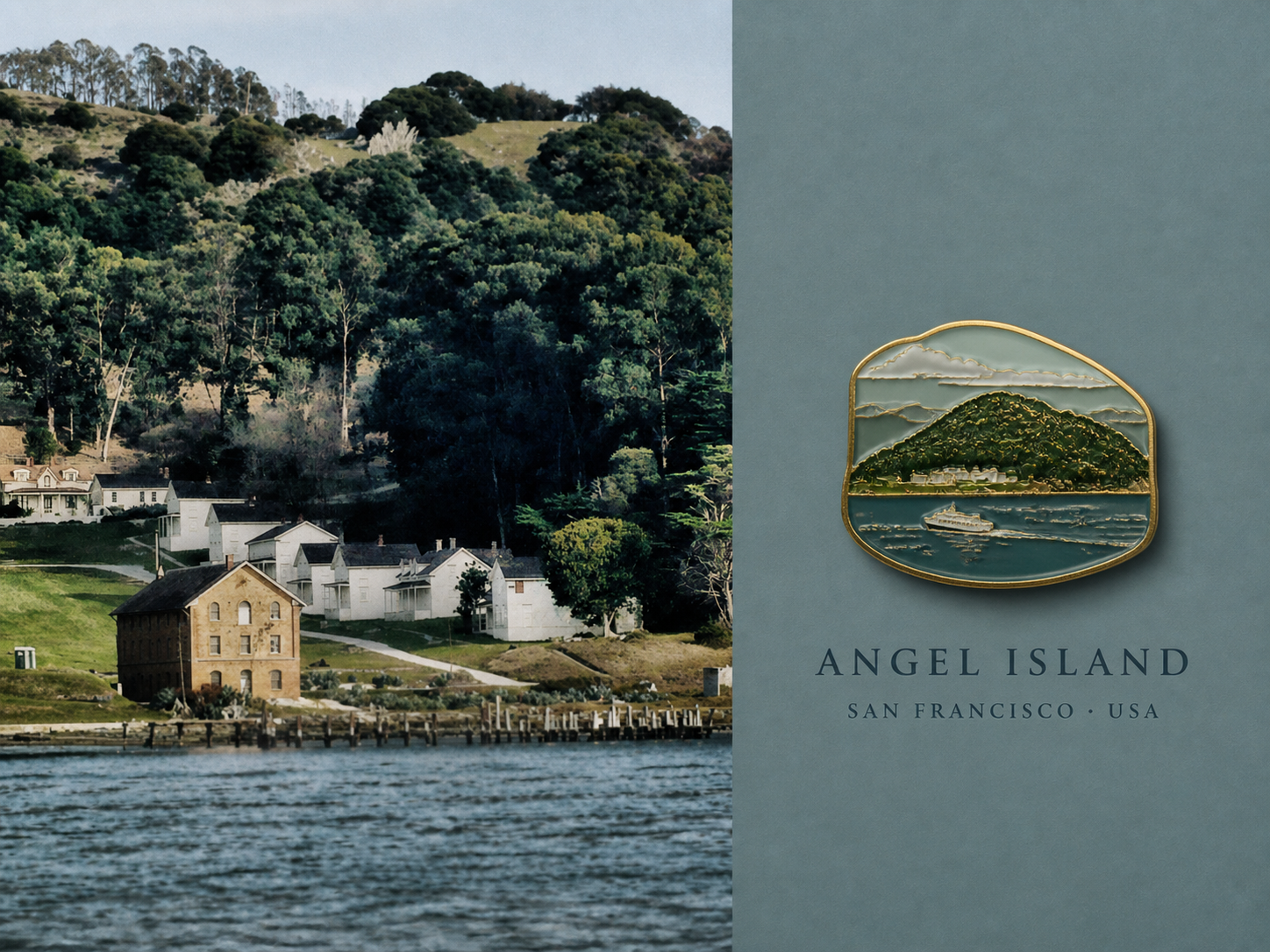
Everyone on the ferry is looking at Alcatraz. Turn the other way. Angel Island is the bigger one, a square mile and a bit of hillside rising to seven hundred and eighty-eight feet, and for thirty years it did something the city has been slower to talk about. Between 1910 and 1940 a federal immigration station on its northeast shore processed something like a million arrivals — from China, Japan, Russia, South Asia. People call it the Ellis Island of the West, and the phrase is comfortable and wrong. Ellis Island was built to let people in. This place was built to keep people out. Look at the low buildings near the cove as you pass, and hold that difference in your head.
Weeks, Months, Twenty-Two Months
The reason was the Chinese Exclusion Act of 1882, which admitted merchants, clergy, diplomats, teachers and students, and barred labourers. So the station's real work was interrogation. Where was the well in your village. How many steps to your father's house. Who slept in the third room. Answers were checked against relatives already ashore, and a mismatch meant deportation. Most arrivals at Ellis Island were through in a day. Here, people waited weeks. Sometimes months. The longest recorded stay was twenty-two months, on an island you can see the city from. Stand at the water and find the skyline. That is the view they had.
The Wall
In 1940 a fire took the administration building and the station closed. The barracks sat empty for thirty years, and by 1970 they were scheduled for demolition. Then a state park ranger named Alexander Weiss walked through with a torch and saw something under the paint: characters cut into the soft wood. Classical Chinese verse, carved by detainees for whoever came next. Scholars confirmed it, the bulldozers were called off, and more than two hundred poems have been recovered since. They are still on the walls. Go inside the barracks and get close enough to read the cuts rather than the labels — that is the whole reason this building is standing.