
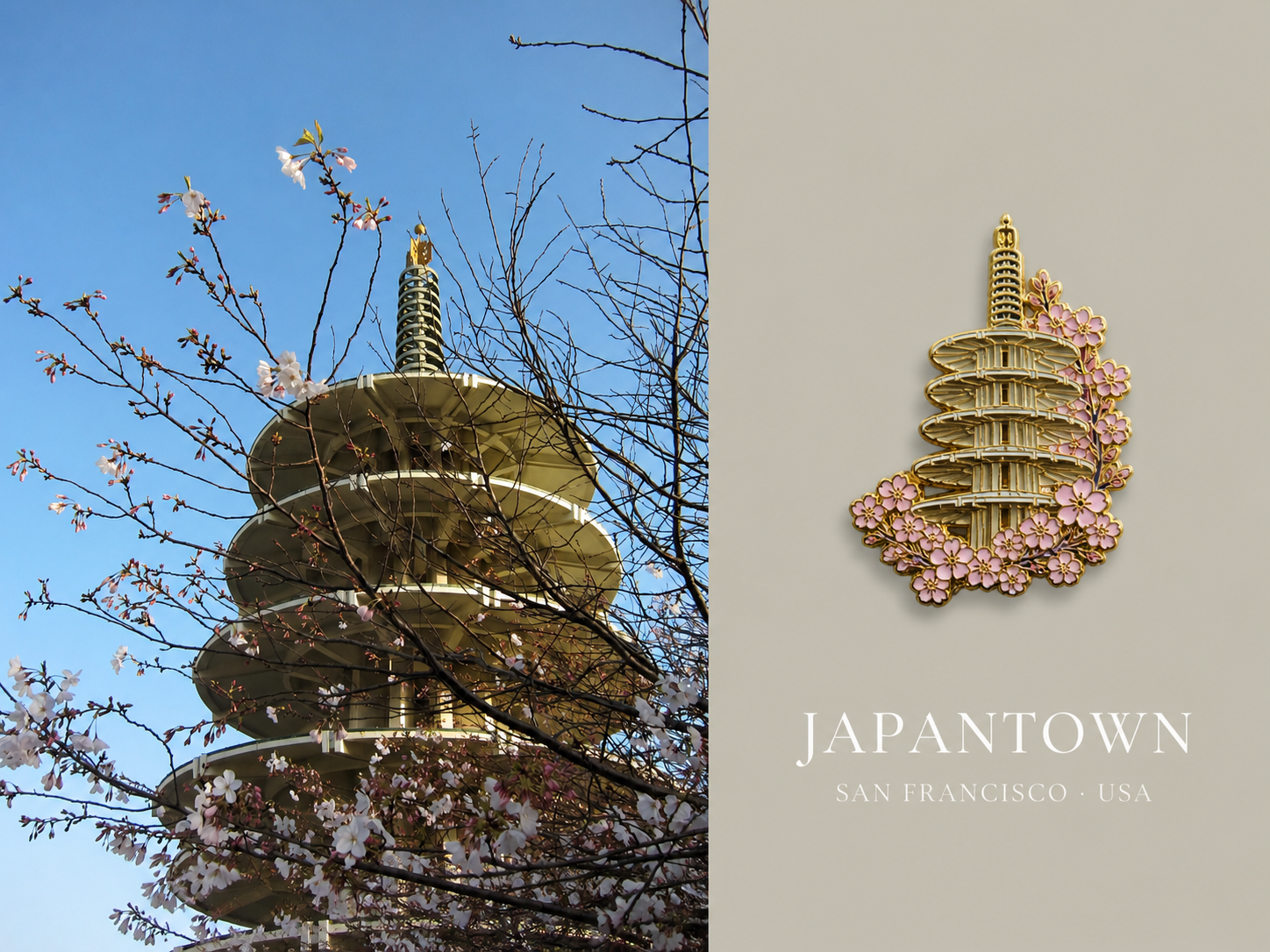
Japantown collectible travel poster

Home / Destinations / San Francisco / Japantown

Free audio guideSan Francisco2 min

Japantown

Five thousand people were removed from these blocks in 1942, and most of them never came back.

2 min listen · free
2minute listen
3sources
3chapters
Freeto listen
San Francisco · 2 min listen · 3 sources

Quick answer

Japantown is a six-block district in San Francisco's Western Addition. By 1940 it held over 5,000 Japanese residents and more than 200 Japanese-owned businesses. Executive Order 9066 emptied it in 1942, and redevelopment in the 1960s cleared much of what remained. The Peace Pagoda, a gift from Osaka designed by Yoshiro Taniguchi, opened in 1968.

1By 1940 the Western Addition Japantown held over 5,000 ethnic Japanese residents and more than 200 Japanese-owned businesses
2Executive Order 9066 was signed in February 1942 and forced the removal of all people of Japanese birth or descent from the Pacific coast
3By 1943 many large sections of the neighbourhood remained vacant

Full transcript

1

Ginza, Six Blocks Wide

Before the war, people compared these streets to the Ginza. By 1940 the Japantown in the Western Addition held more than five thousand Japanese residents and over two hundred Japanese-owned businesses — grocers, bathhouses, printers, doctors, a newspaper. San Francisco had been the main port of entry for Japanese immigration to the United States, so this was not a curiosity district built for visitors. It was where a community banked, worshipped, argued and buried its dead. Walk the length of Post Street and hold that number in your head: two hundred businesses, on a footprint you can cross in ten minutes.

2

Nineteen Forty-Two

In February of 1942 President Roosevelt signed Executive Order nine thousand and sixty-six, and everything above stopped. The order applied to anyone of Japanese birth or descent on the Pacific coast, American citizenship included. People were given days. Shops were sold at whatever price was offered, or shuttered and left. By 1943 large sections of these blocks were simply vacant. Meanwhile the shipyards were hiring, and thousands of African American families arriving in the Great Migration moved into the housing that force had emptied — one displaced community living in the rooms of another. Stand at Post and Buchanan and look at how ordinary the street is. Nothing here announces it.

3

Cleared Again, Then Rebuilt

Most of those who were removed did not come back. Those who did found a neighbourhood that the city was about to clear a second time: under redevelopment in the nineteen sixties, housing was razed and roads were widened, largely without asking the people living there. What stands now was substantially rebuilt on top of that. In the middle of it, in 1968, Osaka gave the city a five-tiered concrete pagoda designed by Yoshiro Taniguchi, and it went up while the bulldozers were still working nearby. Three of the original Japantowns in the United States survive, and this is one. Walk into the plaza, find the pagoda, and then go and look at the Nihonmachi peace plaza plaque — the dates on it are the whole story.

The checkable facts

  • By 1940 the Western Addition Japantown held over 5,000 ethnic Japanese residents and more than 200 Japanese-owned businesses
  • Executive Order 9066 was signed in February 1942 and forced the removal of all people of Japanese birth or descent from the Pacific coast
  • By 1943 many large sections of the neighbourhood remained vacant
  • African Americans arriving in the Great Migration filled the emptied housing during the war
  • Redevelopment under M. Justin Herman razed existing housing and widened transport corridors with little community input
  • The five-tiered Peace Pagoda opened in 1968, designed by Yoshiro Taniguchi and presented by Osaka
  • Walk the length of Post Street and hold that number in your head: two hundred businesses, on a footprint you can cross in ten minutes.
  • About 120,000 people were sent to inland camps.
  • Both communities were then displaced again by redevelopment in the 1960s.
Open in maps
Opens a search for this place — no app install, no account.

After the guide

Practical bookings for this stop. These are affiliate links: they cost you nothing extra and they do not change what we recommend.

Data that works on landing

Get a local eSIM →

Backup eSIM option

Compare eSIM plans →

Museum and attraction tickets

Book timed-entry tickets →

Multi-attraction city pass

Compare attraction passes →

Frequently asked

How many Japantowns are left in the United States?
Three, and San Francisco has one of them. The others are in San Jose and Los Angeles, both also in California. Dozens existed on the West Coast before the war. The removal in 1942 emptied all of them at once, and most never recovered a resident population, so the districts simply stopped existing.
What was Executive Order 9066?
An order signed by President Roosevelt in February 1942 that authorised the removal of anyone of Japanese descent from the Pacific coast, citizenship included. About 120,000 people were sent to inland camps. They had days to sell or store what they owned, which is why so few of the businesses here reopened.
Who lived here while the residents were gone?
African American workers arriving for wartime jobs in the shipyards, part of the Great Migration. They moved into housing that had been emptied by force, and the Western Addition became a centre of Black San Francisco. Both communities were then displaced again by redevelopment in the 1960s.
What is the Peace Pagoda?
A five-tiered concrete stupa in the plaza at the centre of the district, designed by the Japanese architect Yoshiro Taniguchi and given to San Francisco by the city of Osaka. It opened in 1968, in the middle of the redevelopment that was clearing the blocks around it, which is the tension the plaza still carries.

This guide costs nothing

Every standard guide plays end to end, with no signup and no card.

Image credit

Photo: Japantown at Night (3888292034).jpg by Justin Ennis from Ridgecrest, US, via Wikimedia Commons, licensed under CC BY 2.0. This poster is a derivative work and carries the same licence.