
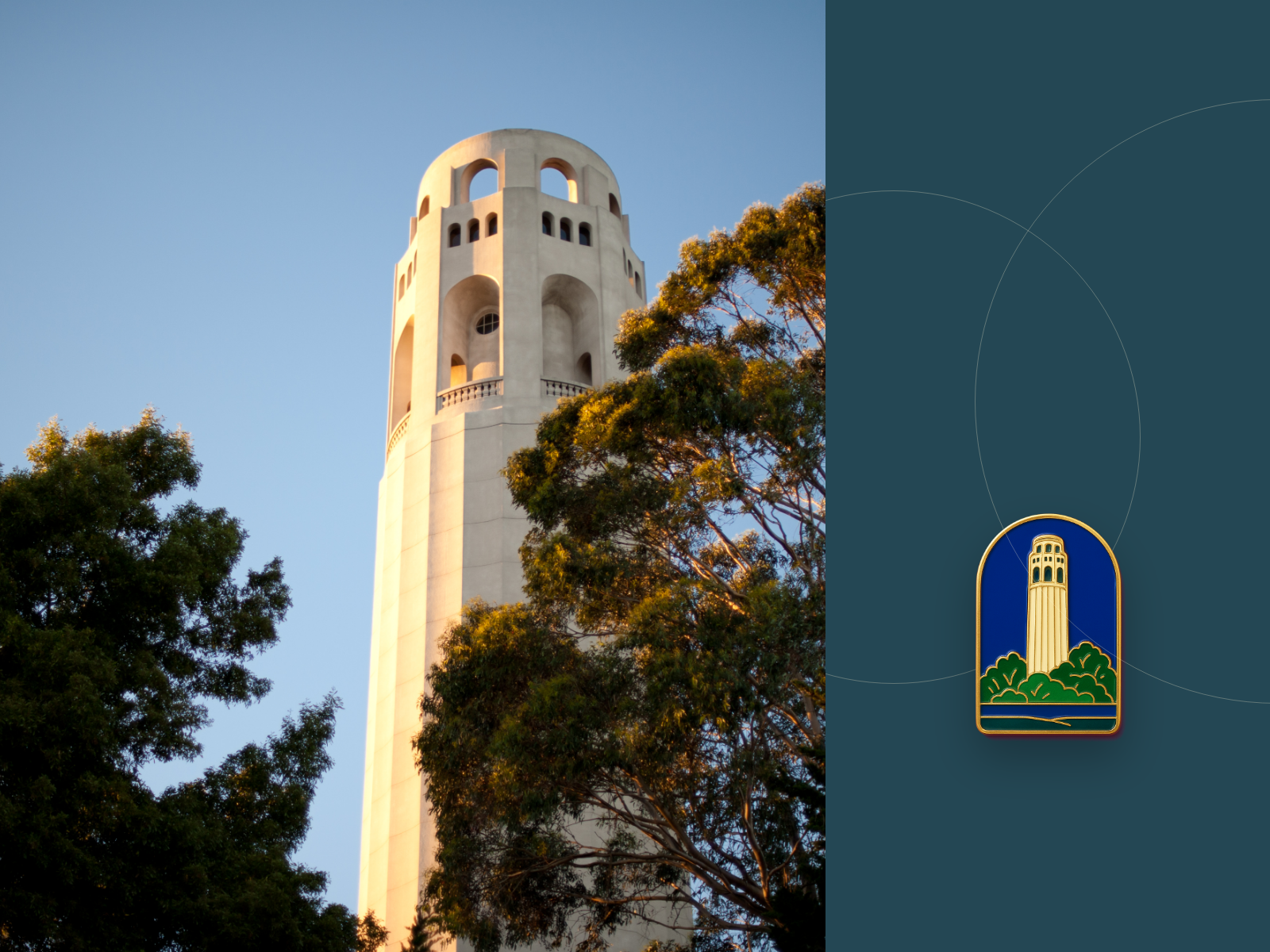
Quick answer
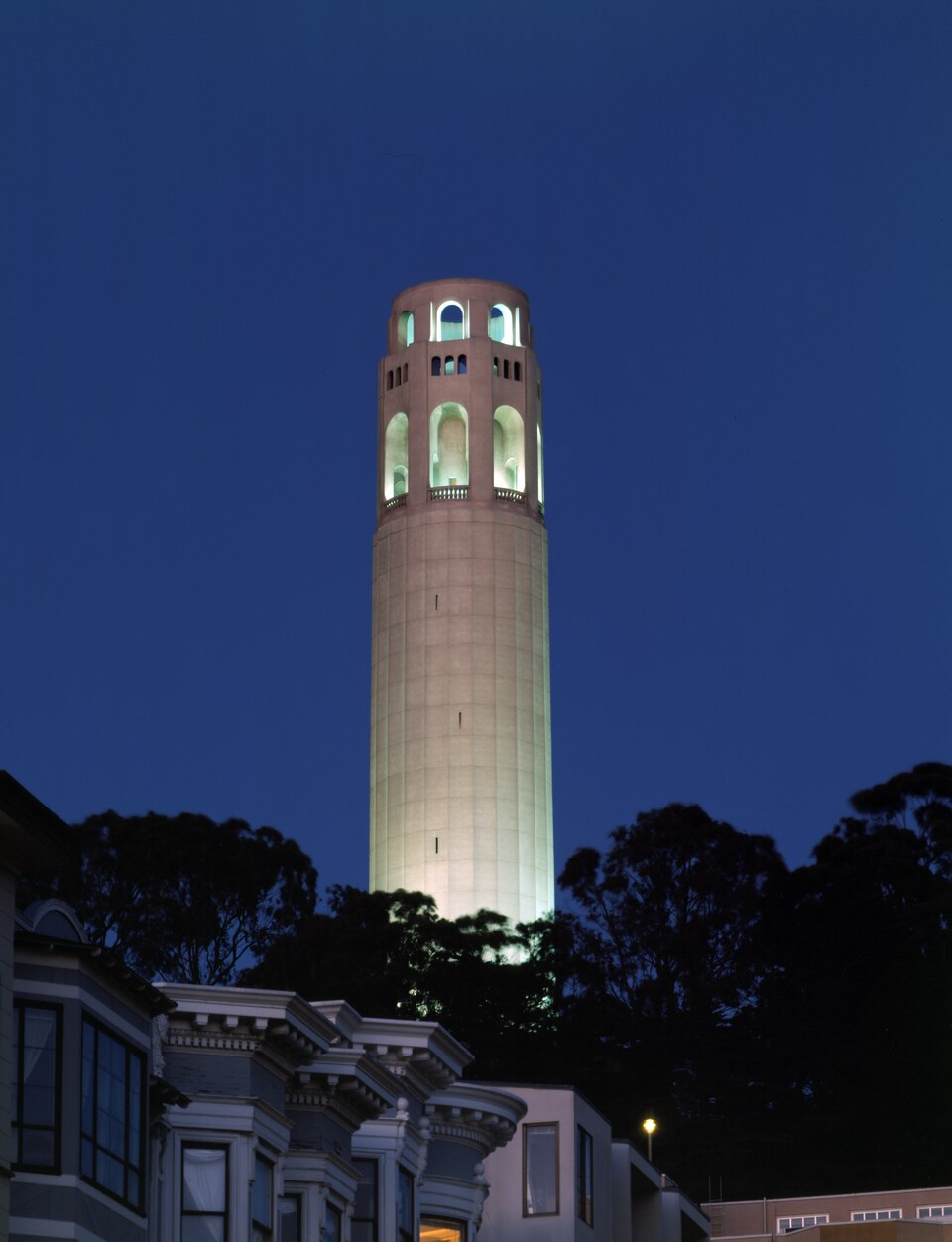
Coit Tower stands 210 feet on Telegraph Hill in San Francisco, completed in 1933 with money left by Lillie Hitchcock Coit, an honorary volunteer firefighter who died in 1929. Its ground floor is wrapped in fresco murals painted in 1934 by 22 artists under a federal relief program. A dispute over communist imagery delayed the public opening until October.
Full transcript
Lillie
Lillie Hitchcock Coit was fifteen years old when she helped a short handed volunteer fire crew pull their engine up a hill, and she never really stopped. Knickerbocker Engine Company Number Five made her an honorary member. She signed her name with a five after it for the rest of her life. She smoked cigars, played poker with men, and once shaved her head so a wig would fit better. When she died in 1929 she left roughly a third of her estate to the city, for the purpose, in her words, of adding to the beauty of the city I have always loved. The money built two things: a monument to the volunteer firefighters in Washington Square, and this tower, finished in 1933 on top of Telegraph Hill. And no, it was not built to look like a fire hose nozzle. The architects said so directly. The resemblance is a coincidence that refuses to die.
The Murals Inside
Go inside, because the outside is not the point. The ground floor is wrapped in fresco murals painted in 1934 by twenty-two artists working under the Public Works of Art Project — one of the first federal programs to put artists on the payroll during the Depression. They painted what they saw: farm labor, factory floors, a city street, a newsstand, a hold up in progress. The style is American Social Realism, and the influence of Diego Rivera, who had been working in San Francisco, is everywhere in it.
Padlocked
Then, in the middle of 1934, the waterfront strike shut down the port of San Francisco and the city turned on the murals. Officials and newspapers looked at the newsstand panel, spotted the communist newspaper titles painted into it, and called the whole thing propaganda. The order came down on the 23rd of June, the opening planned for the 7th of July was cancelled, and the tower stayed padlocked into the autumn. In the end only two things were painted out: a hammer and sickle, and the masthead of a communist paper on the newsstand. The doors opened on the 12th of October, 1934. They are still here, and the surviving detail is worth looking for. The elevator to the top costs money and the queue can be long. Look at the murals on the ground floor — they are free.

,_Fisherman%27s_Wharf_Parking_Garage,_Skyline_--_2022_--_151006.jpg)
,_Coit_Tower_--_2022_--_3082.jpg)

.jpg)
.jpg)

.jpg)

.jpg)


