

Quick answer
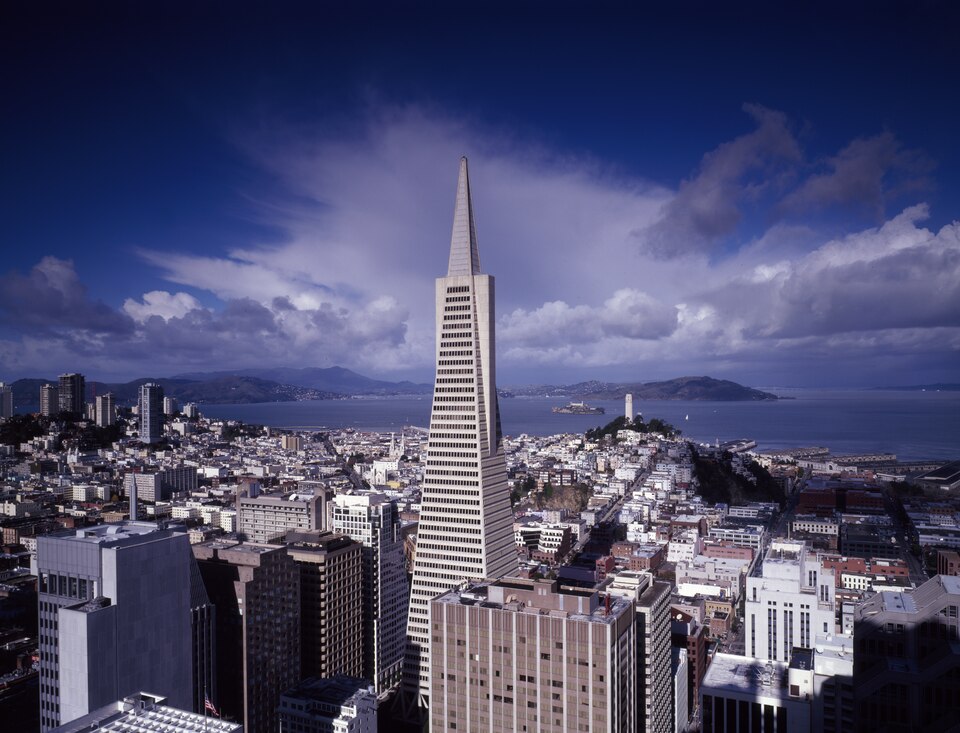
The Transamerica Pyramid is 853 feet and 48 storeys, designed by William Pereira and completed in 1972. The taper was chosen so daylight would still reach the street. Two wings at the top hold the elevator machinery and a smoke evacuation tower. The 27th-floor observation deck closed to the public in 2001; the half-acre Redwood Park at the base is still open.
Full transcript
The Shape the City Hated
The Transamerica Pyramid opened in 1972 and the city hated it. Opponents had a nickname for it built out of the architect's surname that no guide will repeat out loud. People did not want a pyramid in San Francisco; they wanted the flat topped skyline they knew, and the fight over the shape ran for years. The reason it tapers is unglamorous. A tower that narrows as it climbs throws a far smaller shadow than a slab of the same height, so daylight still reaches the street — that was the argument Transamerica's leadership made for the design William Pereira drew. Fifty years on, the architecture critic John King called it an architectural icon of the best sort, one that fits its location and gets better with age.
What You Are Looking At
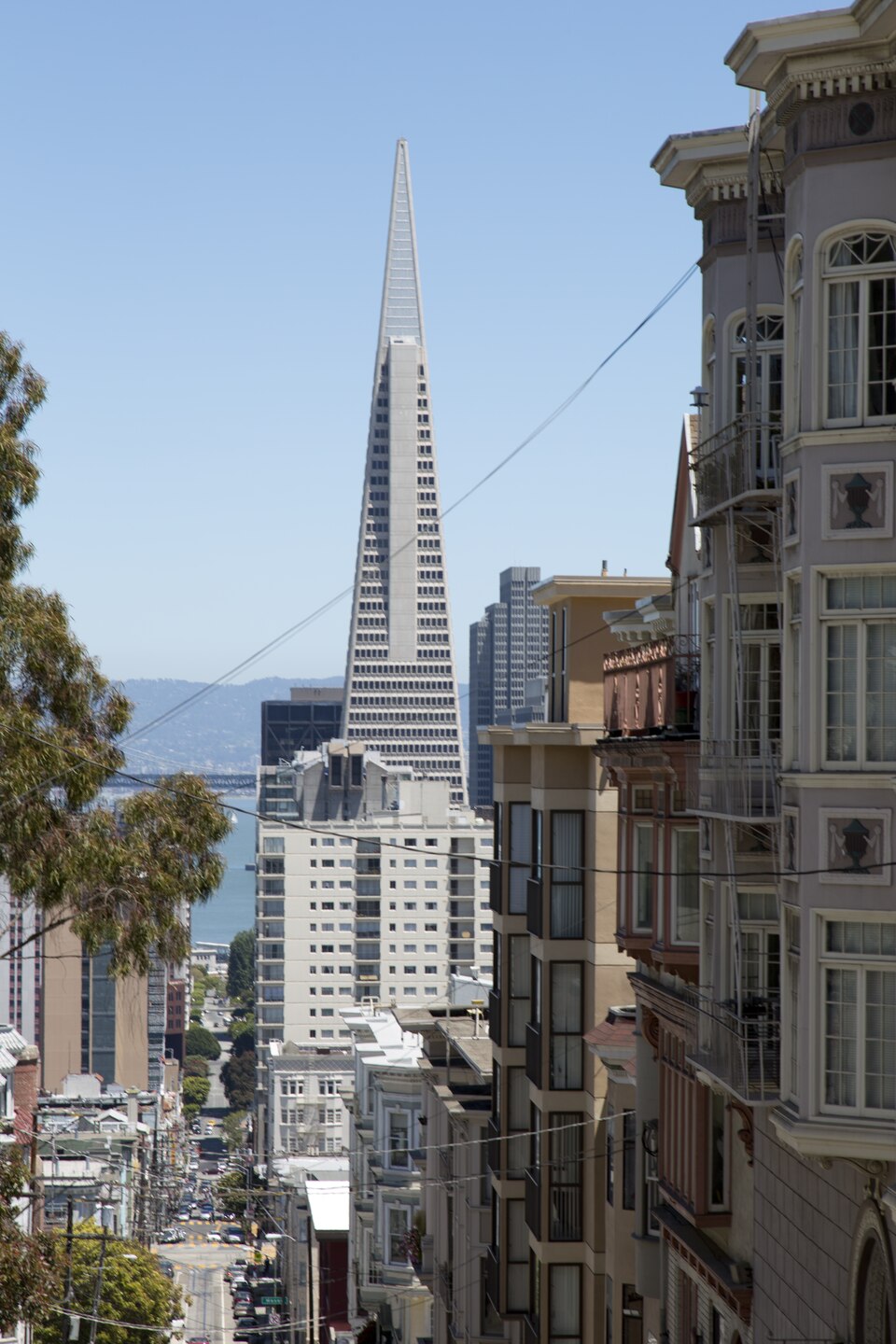
The building is 853 feet tall, 48 floors of quartz aggregate panels and vertical aluminum fins. The fins are not decorative — they shade the windows from the low afternoon sun. At the top are two wings: one encloses the elevator shafts, the other is a smoke evacuation tower for firefighting. Neither is a decorative cap, which means the point you see from the street is the real crown of the building. The observation deck on the 27th floor was open to the public and free until it closed in 2001, and the top floors are private offices now. You cannot go up. But you can walk into Redwood Park at the base — half an acre of redwoods moved here from the Santa Cruz Mountains when the tower went up, and one of the quietest places in the Financial District. Go sit in it for ten minutes.
How to Frame It
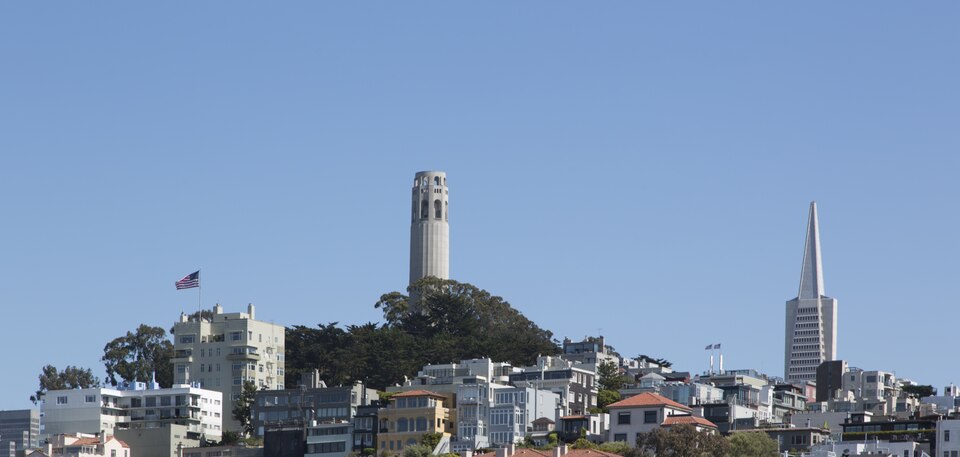
The best photograph of the Pyramid is not from directly underneath. Walk east on Clay Street until you cross Columbus Avenue and turn around. The Pyramid rises through the gap between the low brick buildings of the old Italian neighborhood like a ship in dry dock. Find the contrast — the 1970s tower above the 1920s storefronts tells you more about San Francisco than either building does alone.


.jpg)


.jpg)


.jpg)


_July_2022_(2).JPG)